




Which toy to give based on age? The complete guide from birth to 4 years old
In brief: a good toy matches what the child is currently learning. Before 6 months, they watch and listen. From 6 to 12 months, they grab, chew and shake. From 1 to 2 years, they walk, stack and imitate. From 2 to 3 years, they want to do things by themselves. From age 3, they invent stories.
This guide covers each of these stages in detail: what is happening in the child's development, the types of toys that support them, and the most frequent mistakes. For each age group, you will also find a link to our complete selection and, when available, to our dedicated gift guide.
Why the age on the box is not enough
The age mentioned on a toy is primarily safety information. The famous "not suitable for children under 36 months" pictogram indicates the presence of small parts, not the ideal moment to play with it. Conversely, a toy marked "from birth" may not be of real interest until four or five months.
The right approach, therefore, is to cross-reference two questions. Is this toy safe at this age? And does it match what the child is trying to do right now? This guide helps you decide on the second question.
From 0 to 3 months: watching and listening
A newborn's vision is blurry beyond about 30 centimetres and they are especially sensitive to strong contrasts. Their hands often remain closed, and they do not yet grasp objects intentionally. During these first few weeks, a toy is not handled: it is watched, listened to, and brought to the child rather than the other way around.
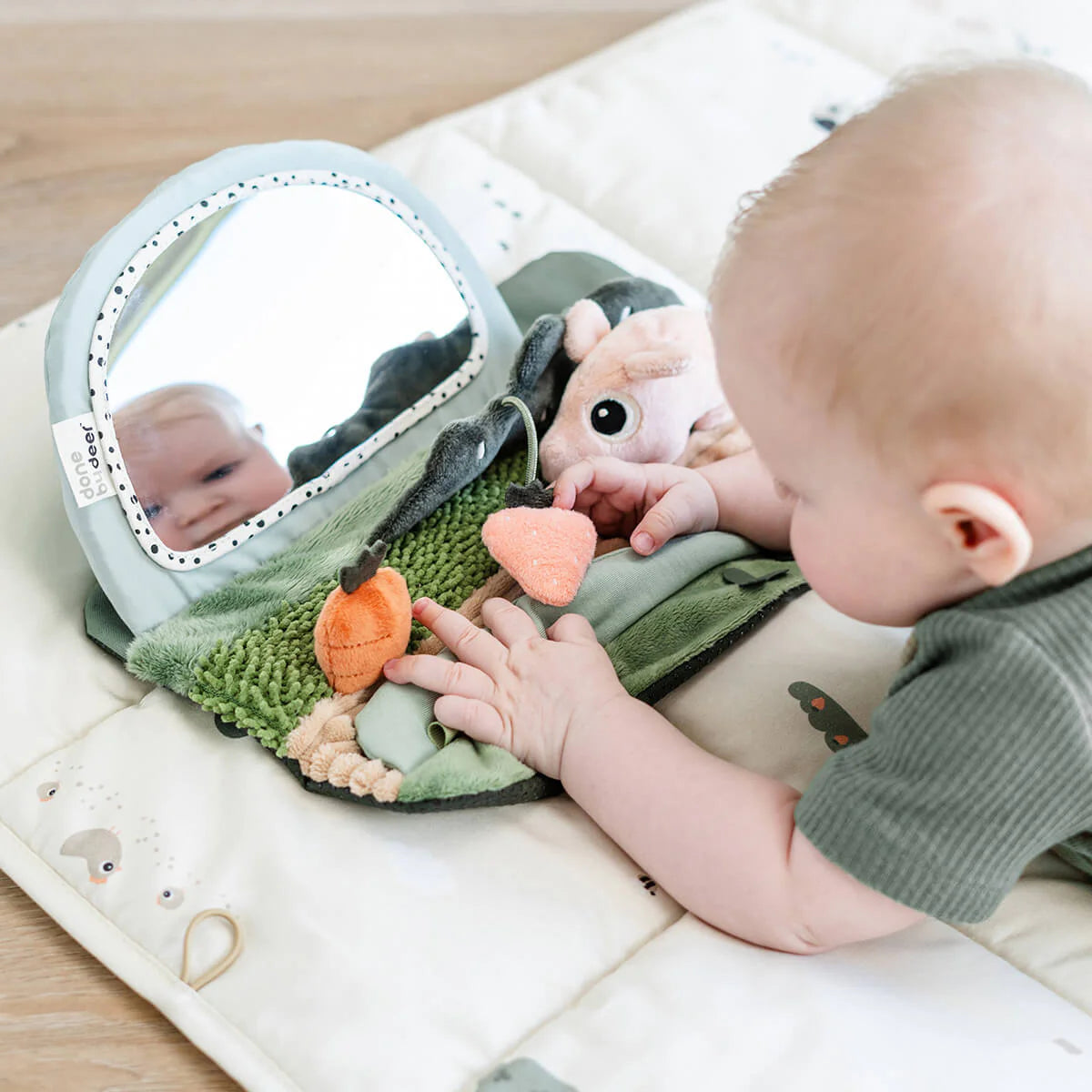
What works: mobiles and activity arches, play mats with hanging elements, black and white images, music boxes and very lightweight flat comforters.
What can wait: anything that requires grabbing, shaking or stacking. A rattle given at birth will not truly be useful until three months later.
All our ideas for this period can be found in the 0 to 6 months toys collection.
From 3 to 6 months: hands come into play
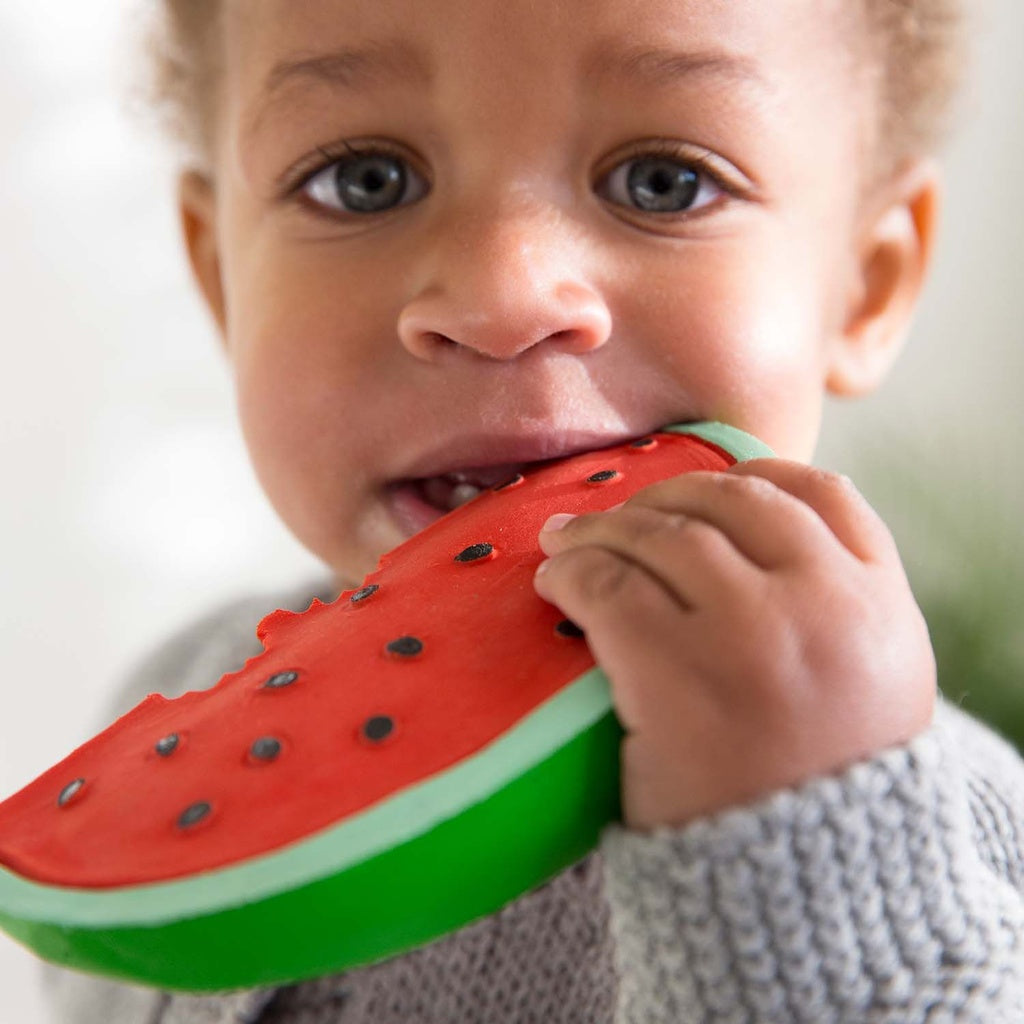
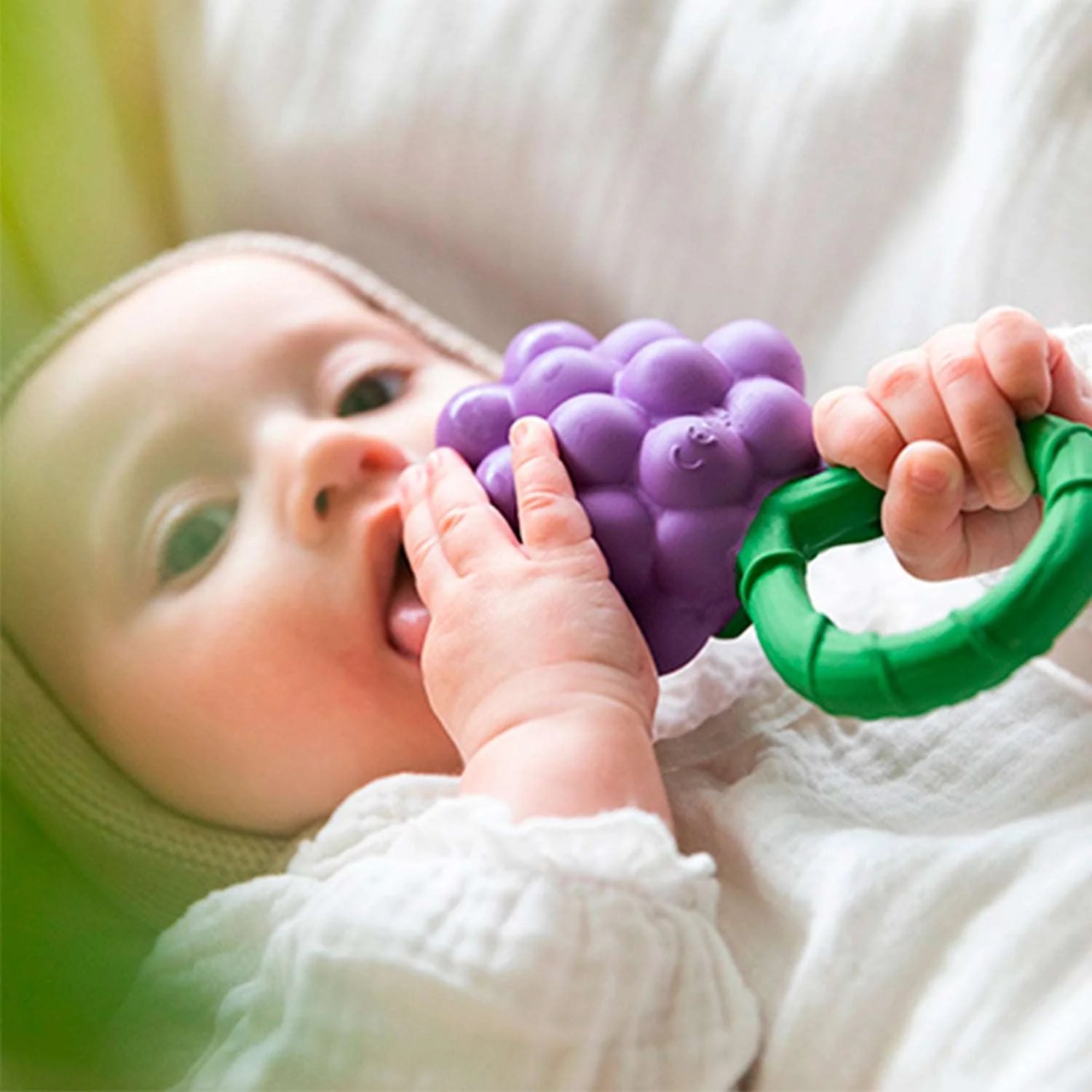
This is a subtle but decisive turning point. Babies discover their hands, watch them, put them in their mouths, and then begin to reach for what they see. Around 4 or 5 months, they intentionally grab an object placed within reach. Everything they grab immediately ends up in their mouth: it is their way of exploring, and it is perfectly normal.
What works: lightweight, easy-to-grasp rattles, toys with varied textures, soft teething rings, and activity chains for the stroller or bouncer.
The criterion to watch: materials. Natural rubber, food-grade silicone, untreated or water-painted wood, certified cotton. At this age, this is not a marketing pitch but a real selection criterion.
You will find our complete selection in the sensory development and rattles and teething toys collections.
From 6 to 12 months: grabbing, chewing, shaking
Babies can sit up, pass an object from one hand to the other, bang two objects together, and discover with fascination the relationship between cause and effect: I shake, it makes noise; I let go, it falls. The first teeth often appear during this period, bringing a very concrete need for firm things to chew on. Towards the end of the first year, they pull themselves up to stand and begin opening everything that opens.
What works: simple sound toys, teething rings, activity plush toys, the first cloth or board books, and activity boards with doors and latches. The small Egmont Toys lock board is a good example of a toy that starts around 10 months and stays with the child up to two and a half years old.
What can wait: multi-function toys that light up and talk on their own. An object that is too "chatty" does the work for the child.
We have dedicated a complete article to this first year: Christmas gift for a baby aged 0 to 1, 12 meaningful ideas. The complete selection can be found in the 6 to 12 months toys collection.
From 12 to 18 months: walking changes everything
First steps generally arrive between 10 and 18 months, and they completely transform how a child plays. A child who has just started walking looks for excuses to walk: they push, pull, transport, fill and empty. Their precision also improves, and around 15 months, they finally manage to put a shape into the correct hole.
What works: pull-along toys on a string, dump trucks, shape sorters, stacking blocks, and large building pieces designed for small hands.
The classic trap: the baby walker or ride-on toy given too early. As long as a child cannot stand steadily on their own, a toy they can pull is better than one they lean on.
Find our entire selection in the 1 to 2 years toys collection and in motor skills and coordination.
From 18 to 24 months: imitation begins
This is one of the loveliest periods to observe. The child begins to reproduce what they see: they pretend to drink from an empty cup, put the phone to their ear, feed their comforter. At the same time, their vocabulary grows at high speed and books become fascinating. They also discover that a crayon leaves a mark.
What works: first compact imitation games (small ice cream stand, first fabric baby doll, wooden camera), picture books and nursery rhyme collections, thick crayons and stamps, and mess-free creative activities like magic water painting.
What can wait: large play kitchens with dozens of accessories. At this age, a simple scenario with few pieces works better than a complete world in which the child gets lost.
Everything is detailed in our guide Christmas gift for a 1 to 2 year old, 14 ideas that last longer than a week, and the complete selection is gathered in the 1 to 2 years gifts.
From 2 to 3 years: doing it all by themselves
"Me do it" becomes the phrase of the year. The child wants to get dressed, pour, open, close and choose. Their fine motor skills now allow them to handle small elements, turn pages one by one, and perform movements in several steps. Imitation play develops: they no longer just reproduce a gesture, they string several actions together in a logical order.
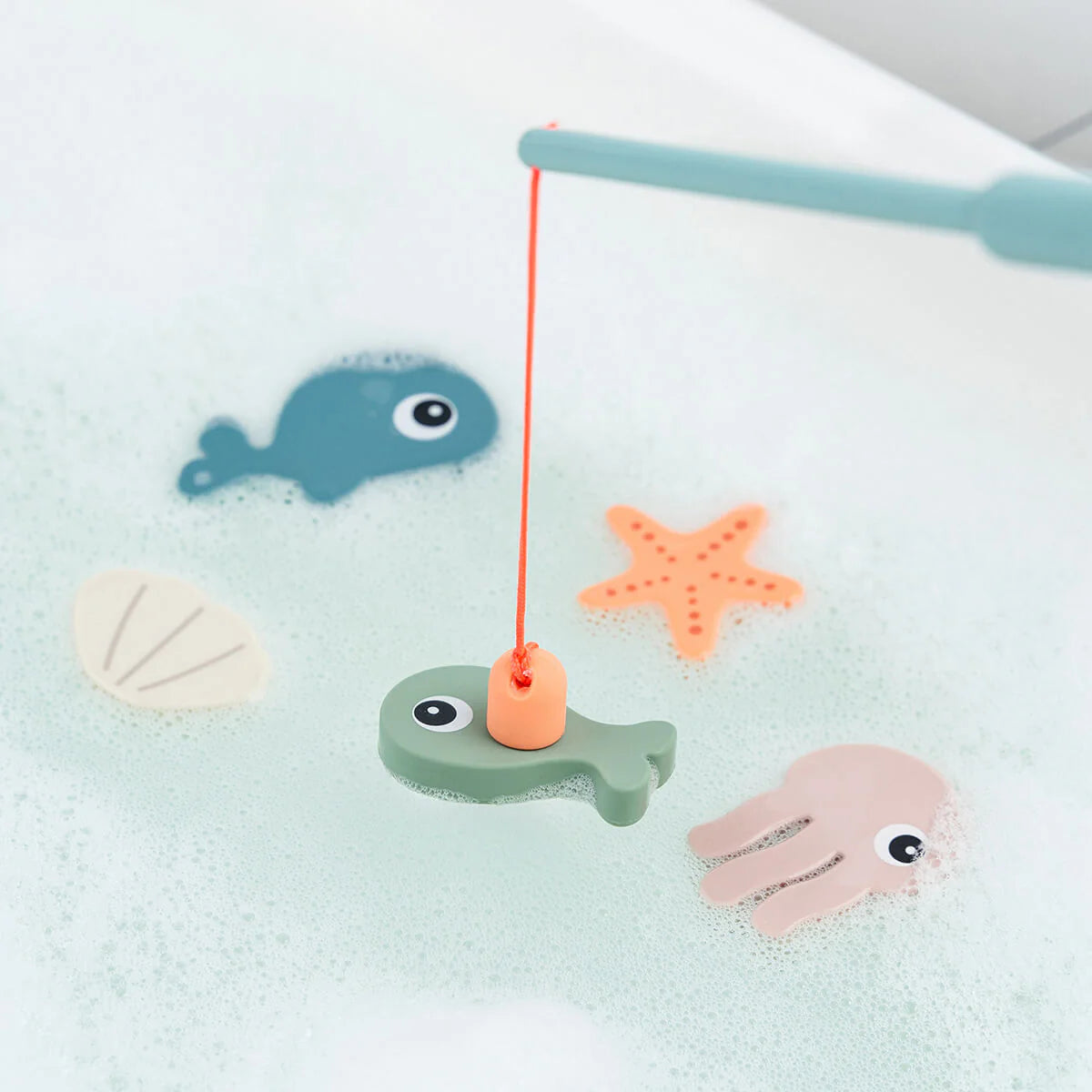
What works: hands-on activity books, realistic kitchen utensils, small wooden figures and vehicles, sound card games, and the first magnetic games.
A few examples from our selection:
- The Janod Farm Busy Book (€19.99): twenty pages of activities to open, close, button and slide. Perfect for journeys.
- The Egmont Toys set of stainless steel saucepans with wooden handles (€29.95): real materials, which make all the difference for a child who wants to "do it like Mummy and Daddy".
- The Konges Sløjd Game On sound controller (€29.95): slide an animal card into the slot and discover its call. A recognition game that nurtures language.
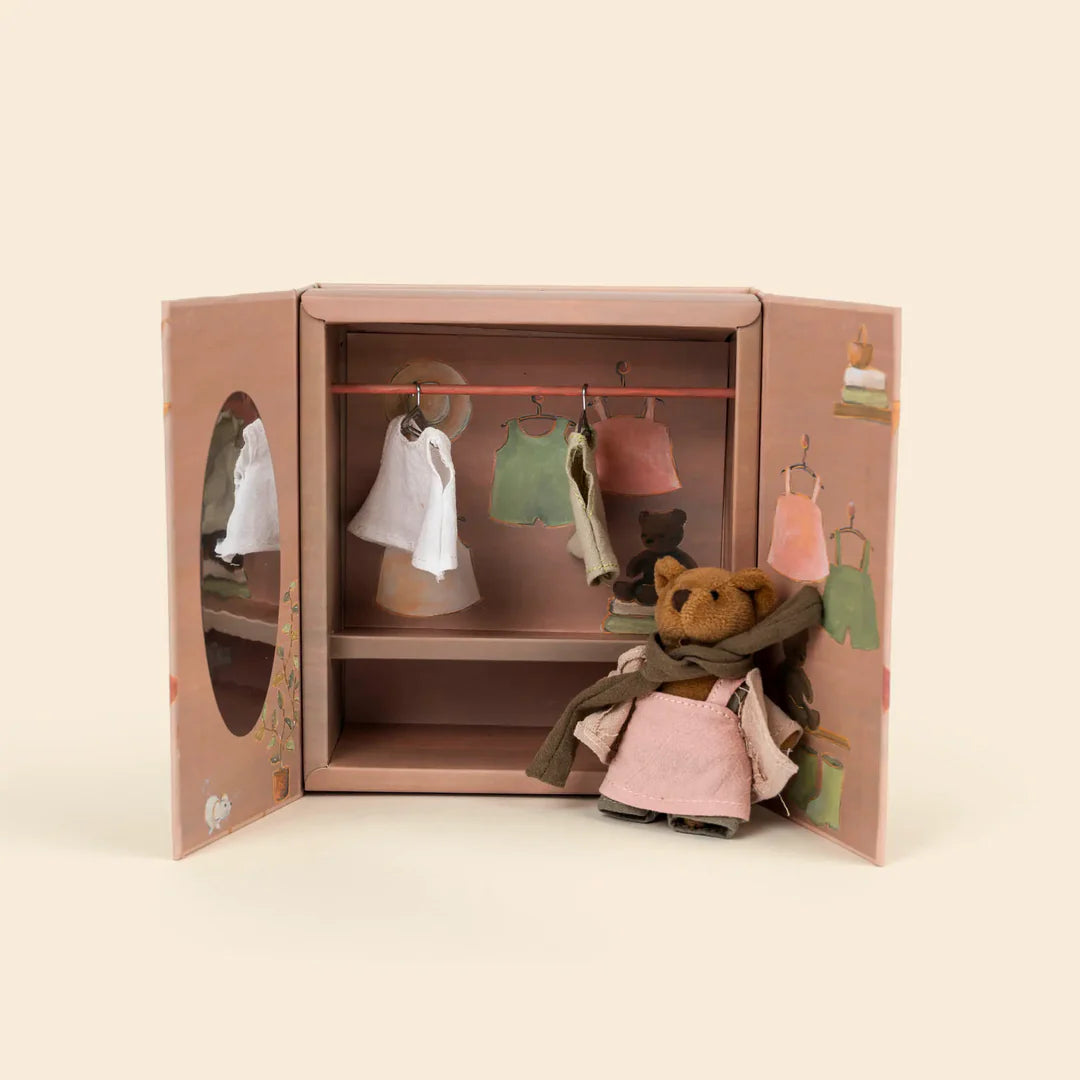
- Morris the bear and his clothes in a suitcase (€45.95): dress, undress, pack up, go on a trip. A play companion that leads them towards their first scenarios.
The criterion to watch: frustration. A toy that is too complex will discourage a two-year-old in minutes. A challenge slightly above their abilities is better than a step that is too high.
The entire selection is gathered in the 2 to 3 years toys and 2 to 3 years gifts collections.
From 3 to 4 years: the age of stories
At three, a child no longer handles an object just to see what it does: they give it a role, a voice, a story. They invent complete situations with a beginning and an end, begin to play with others rather than alongside them, and can stay focused for fifteen or twenty minutes on an activity they have chosen. It is also the age of the first games with very simple rules, like "taking turns".
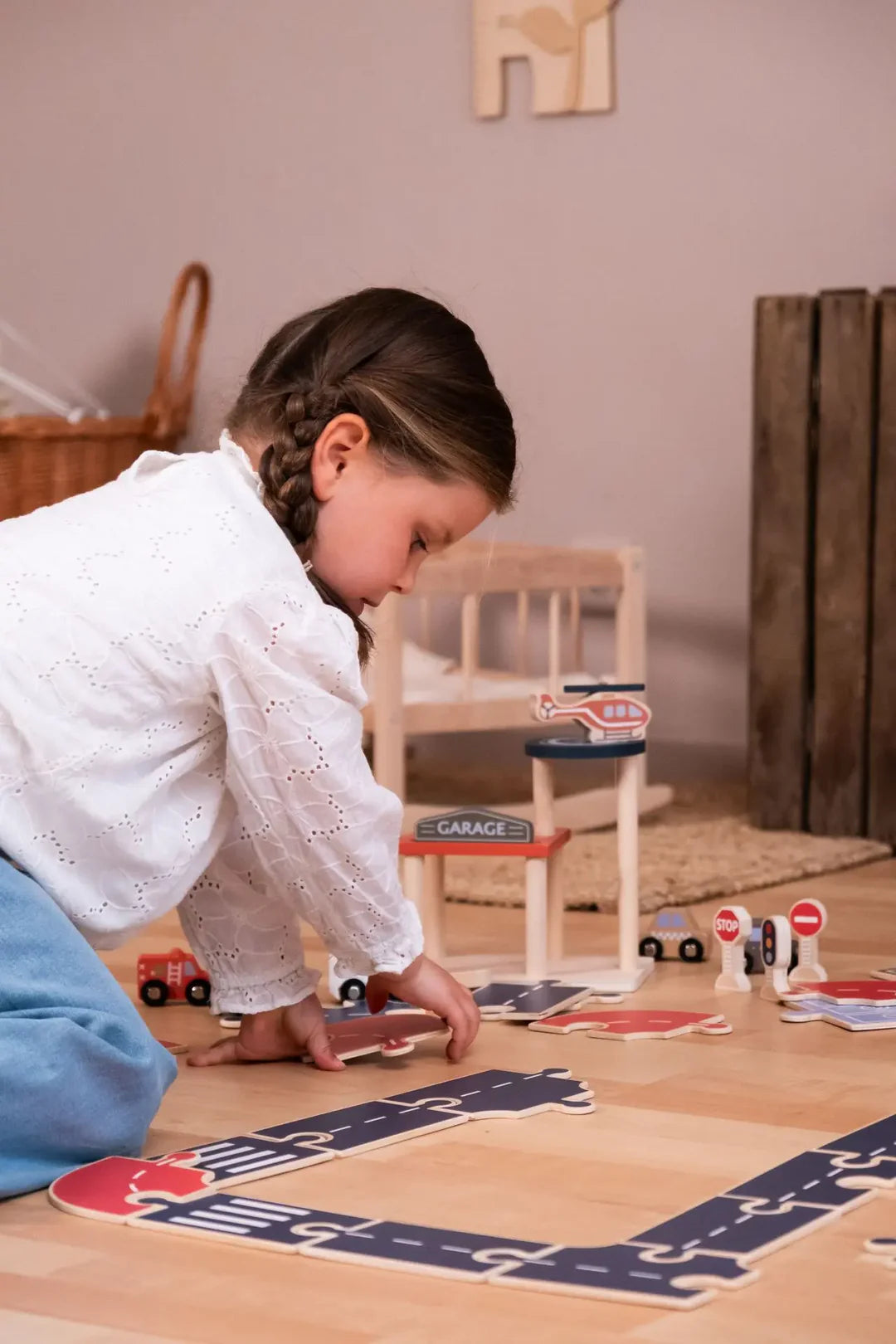
What works: profession sets (doctor, shopkeeper, cook), a complete play kitchen, magnetic games, lacing and precision games, creative activities that can be carried out alone from start to finish, and the first board games.
What can wait: games involving strategy, counting or bluffing, which usually come around age five. Starting too early mostly leads to tears.
Our guide Christmas gift for a 3 to 4 year old, 13 ideas that spark the imagination details our favourites for this age. The complete selection is in the 3 years and older toys, imitation games and play kitchen collections.
Summary at a glance
| Age | What they learn | Suitable toys |
|---|---|---|
| 0 to 3 months | Watching, listening | Play mats and activity arches, mobiles, contrasts, music boxes |
| 3 to 6 months | Discovering their hands, grasping | Lightweight rattles, textures, teething rings |
| 6 to 12 months | Cause and effect, chewing | Sound toys, activity plush toys, cloth books, activity boards |
| 12 to 18 months | Walking, stacking, fitting | Pull-along toys, trucks, shape sorters, large building pieces |
| 18 to 24 months | Imitating, talking, drawing | First imitation games, picture books, thick crayons, stamps |
| 2 to 3 years | Doing it by themselves | Activity books, realistic utensils, small figures, sound games |
| 3 to 4 years | Inventing stories | Professions, play kitchen, magnetic games, lacing, creative activities |
Four rules that apply at every age
Aim for right now, not far ahead. A toy given six months too early ends up at the back of the cupboard and will be forgotten by the day it would have been perfect. If you are hesitating between two age groups, choose the younger one.
Prefer an open-ended toy to a single-function one. Blocks, a play kitchen or a truck serve a hundred different uses. A toy that only does one thing is quickly exhausted.
Fewer toys, better chosen. A child faced with too many objects flits from one to another and never settles into any game. Many families rotate toys, putting some away for a few weeks.
Check materials and standards. Until at least age three, everything goes in the mouth. The CE marking, the absence of small detachable parts and the quality of the materials are non-negotiable criteria.
At Maison Canailles, each product page states the recommended age, materials and standards for the toy. Because a good choice begins with clear information.
Frequently asked questions
What toy should I give a newborn baby?
Before three months, focus on what the baby can watch and listen to: a play mat, a mobile, a flat comforter or a music box. Toys to grab will be useful from about four months. For a birth gift, our birth gifts collection gathers ideas designed to last.
What does "not suitable for children under 36 months" mean?
It is a safety notice: it indicates that the toy contains small parts that could be swallowed. It does not say when the toy becomes interesting for the child. A toy can carry this notice and only be truly suitable from age four or five.
At what age should I start imitation games?
The first imitative gestures generally appear between 15 and 18 months. You then start with very simple scenarios and few pieces. Elaborate imitation play, with roles and stories, develops mostly from age three.
Are Montessori toys suitable for all ages?
The Montessori approach offers materials for every stage of development, from the very first weeks. What matters is choosing an object that matches the movement the child is trying to master at that moment. You will find a selection in our Montessori toys collection.
My child is ahead of or behind these milestones, is that a problem?
No. The ages given here are averages, and differences of several months between two children are perfectly normal. Observe what your child is trying to do right now and choose based on them rather than the calendar. If you have any doubts about their development, your paediatrician remains the right person to ask.
To go further
Our entire selection is organised by age group in the toys by age collection. For end-of-year gifts, our three detailed guides await you: 0 to 1 year, 1 to 2 years and 3 to 4 years. And if you are still hesitating, the Maison Canailles gift card leaves the choice to the parents.
Mallaury, founder of Maison Canailles
Mum to a little boy since 2024 and passionate about e-commerce, I personally select every toy in the shop. Most were first adopted at home, by my son. Learn more about Maison Canailles
Read more

At three years old, a child no longer just handles objects: they tell stories. They invent tales, take on roles, and play with others. Here are 13 Christmas gifts designed for this age where everyt...

Twenty-four boxes, a reasonable budget, and zero gadgets destined for the trash on December 26: our method for filling an Advent calendar with real little toys, adapted to the child's age.