A mane made for grabbing
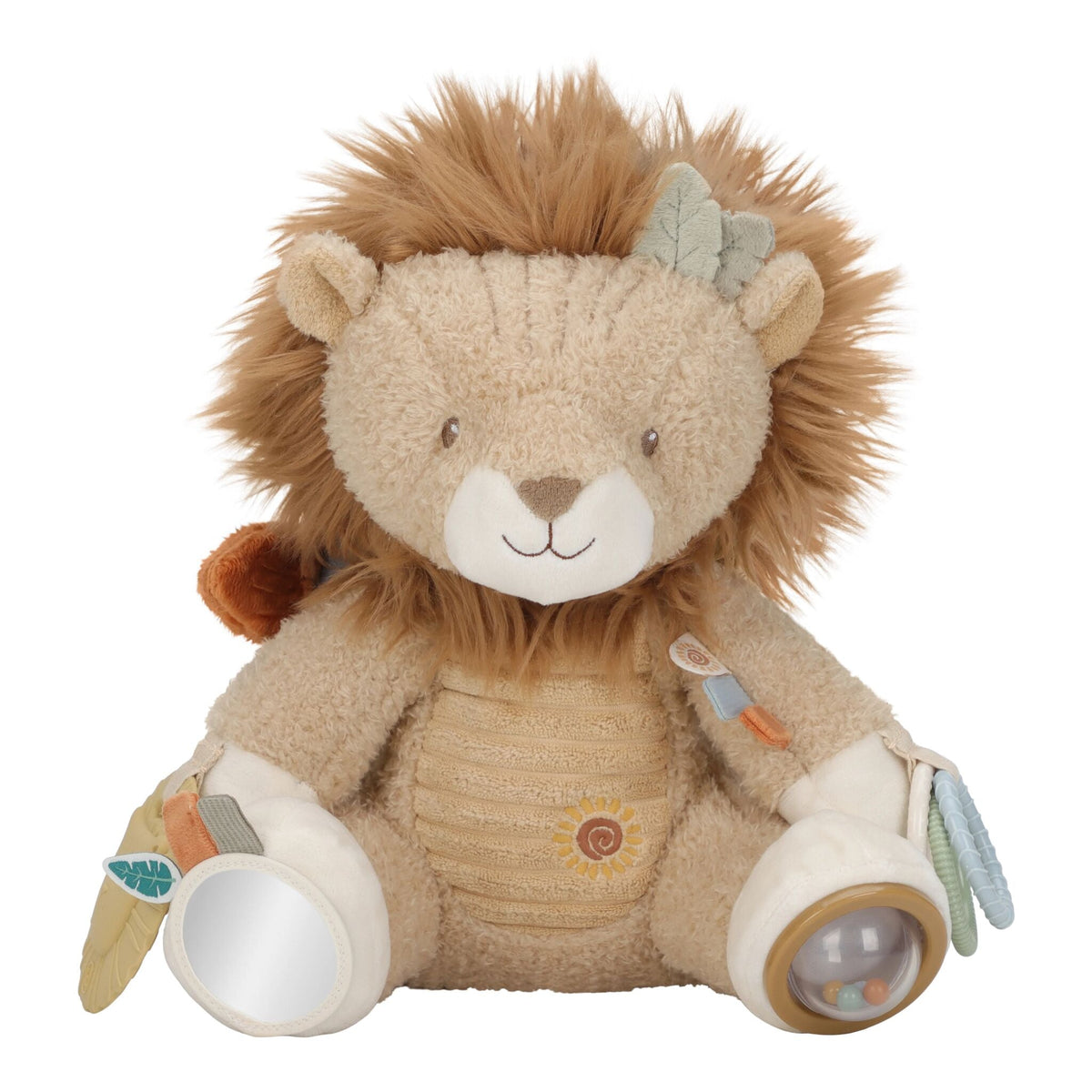
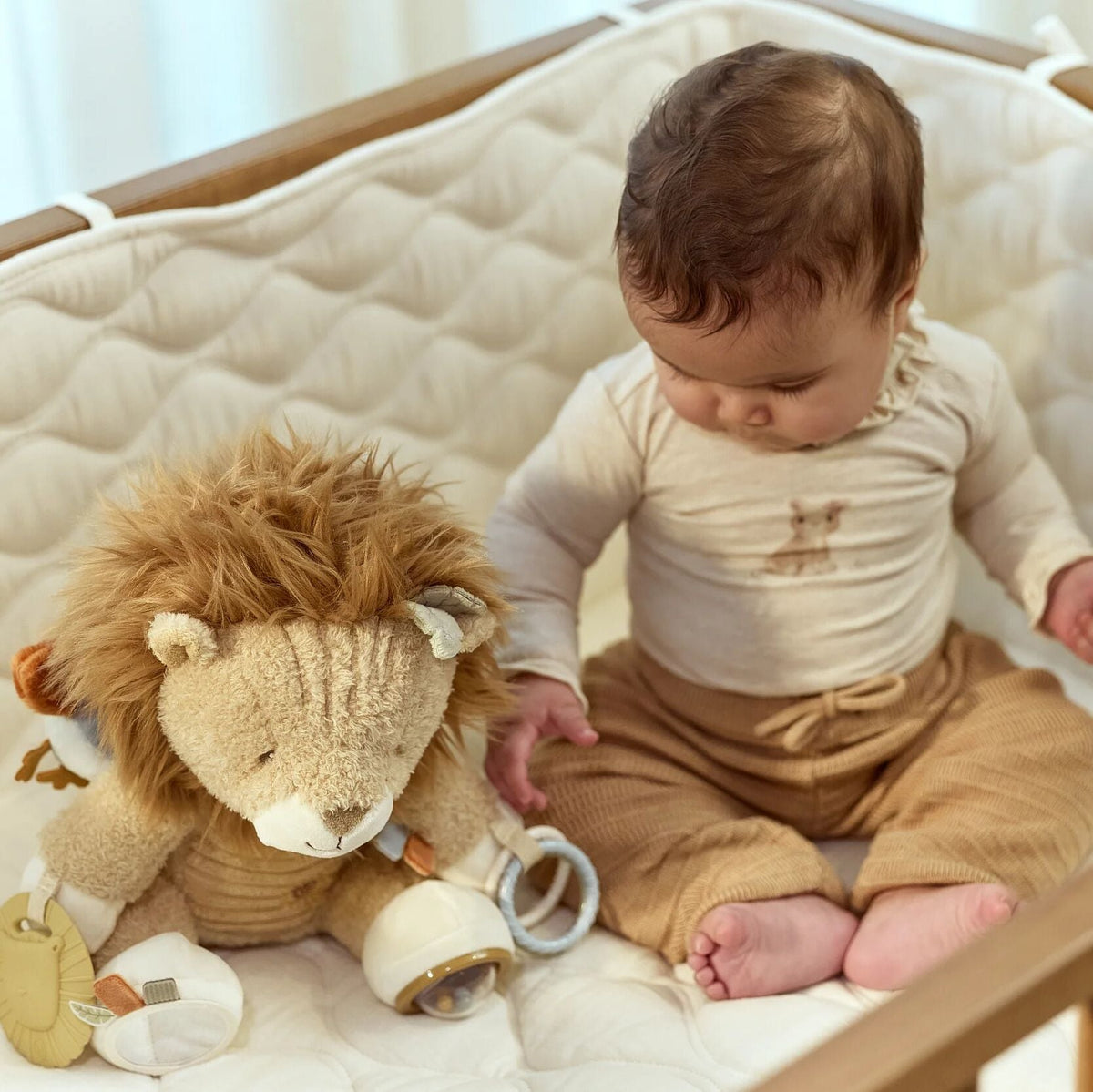
Around the lion's face, the mane alternates textures: loops, smooth fabric, short fringes. It's the area that hands seek out first because it offers a good grip. A four-month-old baby doesn't yet open their hand to grasp neatly; they scrape and grab. A mane is made for grabbing.
Rattling rings, a first lesson in cause and effect
Suspended from the body, two plastic rings clatter together at the slightest movement. The sound never happens on its own; it follows the movement. This association, repeated dozens of times a day, is one of the very first bits of reasoning an infant develops. The integrated mirror and silicone teething ring complete the set.
The little bird perched, a pretext for talking
A colorful bird is sewn onto the lion. It doesn't serve a functional purpose, and that is precisely its value: it provides a topic of conversation. Naming it, pointing to it, making it sing—this is "language bathing," and it matters just as much as the textures.
Frequently asked questions
Is it too stimulating for a newborn?
No, provided you pace it. An infant takes what they can: they will look at the contrasts first, ignore the rings for weeks, then discover the sound. The toy lasts throughout the entire first year.
Are the rings sturdy?
They are sewn to the body and designed to be pulled. As with any developmental toy, it is still good practice to check the seams from time to time.
Can it be attached to the stroller?
It does not have a dedicated attachment. For the stroller, an activity chain or a toy equipped with a fastening ring will be more practical.
How do I clean it?
Hand wash, as indicated by Little Dutch. The mirror and plastic parts do not like the tumble dryer. Use mild soap, rinse, and air dry flat.
Lion or flamingo, which one to choose?
Same construction, same price, two different vibes. The lion plays on ochre tones and dense textures, while the pink flamingo activity plushfeatures pinks and finer materials.