Imaginative play: why it matters so much and which toys to choose by age
In brief: pretend play is when a child reproduces what they see around them: cooking, talking on the phone, caring for others, going shopping. It appears around 12 to 18 months with simple gestures, turns into little scenes around age 2, then real role play around age 3. It develops language, motor skills, emotions and understanding of the world.
This is one of the most important forms of play in early childhood. Here is what it provides in concrete terms, how it evolves according to age, and the toys that best support it.
What children learn through imitation
For a young child, imitating is not copying. It is their primary way of learning, long before they know how to ask questions.
- Language. While playing, the child speaks: they name objects, comment on their actions and lend their voice to their doll. Pretend play is one of the richest environments for expanding vocabulary.
- Fine motor skills. Pouring, screwing, buttoning, cutting: everyday actions reproduced through play refine the precision of the hand.
- Emotions. Caring for a soft toy before a doctor's visit, scolding a doll the way they themselves have been scolded: the child re-enacts what they have experienced to better understand it.
- Understanding the world. Paying at the till, waiting their turn, preparing a meal: they discover the rules and the order of things.
- Relating to others. Around age 3, play becomes collective. Roles are shared out, negotiations happen, and stories are invented together.
How pretend play evolves between 1 and 4 years old
From 12 to 18 months: the first gestures
The child reproduces isolated gestures: they hold a phone to their ear, pretend to drink from an empty cup, or wipe the table with their sleeve. The most suitable toys are simple, sturdy and close to real objects. The Mushie silicone squeeze phone can be held to the ear just as easily as it can be chewed on.

Price: €14.90 (available in pink and green). Discover the squeeze phone
From 18 months to 2 and a half years: little scenes
Gestures are linked together: the child prepares a meal and then serves their doll, takes a photo and then shows it to everyone. They also imitate activities they observe from further away, such as driving.

The Janod camera, made of wood with a silicone casing, makes a shutter sound and a small flash with every photo. It is recommended from 18 months, and children often keep it around their neck for much longer than expected.
Price: €14.99. See the Janod camera
To play at driving like the grown-ups, Stella au volant by Lilliputiens (€24.99) is a fabric activity steering wheel with a mirror, key and horn, which also comes along on car journeys.
From age 3: role play
The child becomes the doctor, the shopkeeper, the dad or the teacher. They invent dialogue, assign roles and build stories that can last all afternoon. This is the age when themed toys truly come into their own.
The main families of pretend play toys
Play kitchens and cooking
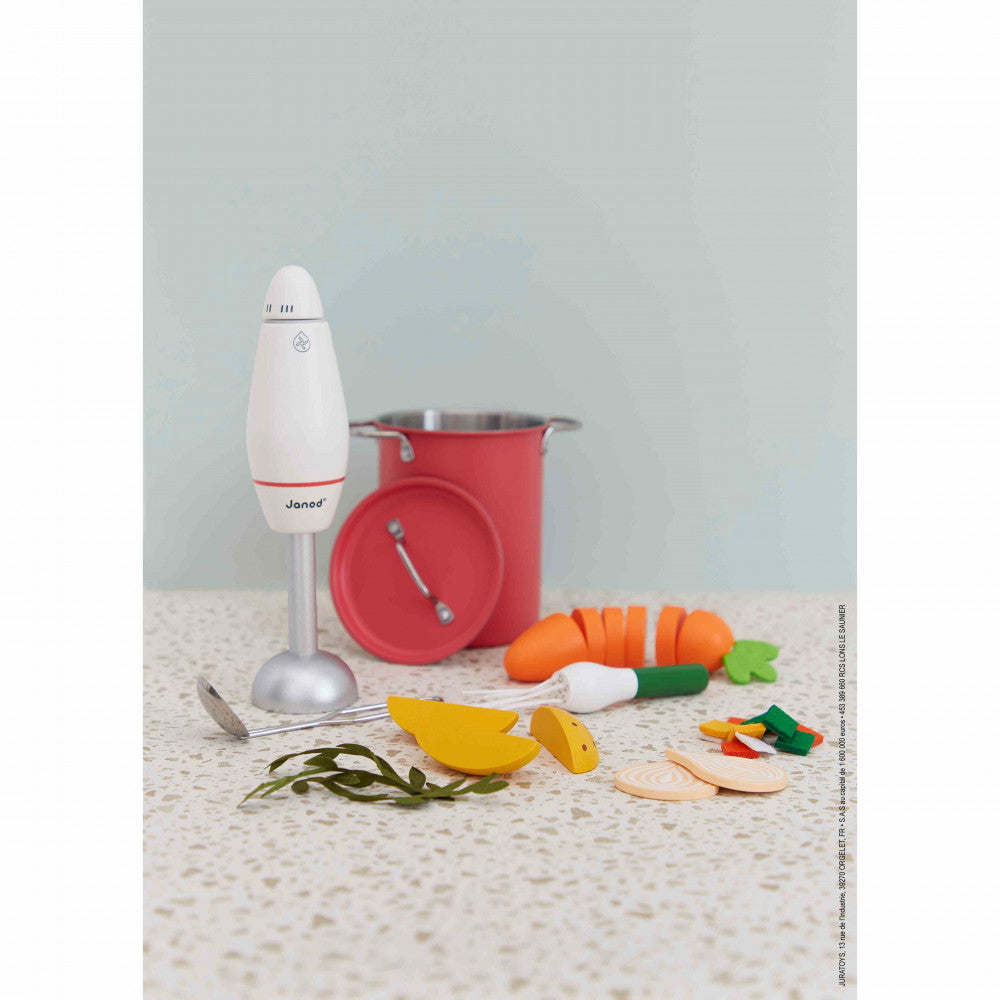
This is the great classic, and arguably the richest: it involves sorting, pouring, counting and serving. We have dedicated a full article to it, wooden play kitchen: at what age to give one and how to choose the right one, with our step-by-step ideas. The entire selection can be found in the kitchen play collection.
Dolls and baby care
Taking care of a doll means re-enacting the care one receives oneself: feeding, changing, rocking. It is also a precious game when a new sibling arrives, as it helps the older child find their place.

Mini Colettos dolls are 34 cm tall, an ideal size for being carried everywhere by little arms. Several models are available, so that every child can find their own.
Price: €42.90. Discover Lyla the doll
For baby care, the Nursery changing bag by Janod (€29.99) unfolds into a changing table and contains 8 accessories. The Tiny Harlow magic bottles (€14.90), whose liquid seems to disappear when tilted, are always a sensation at mealtime.
Playing doctor
This is often the favourite game just before or just after a visit to the doctor. It helps take the drama out of vaccinations and check-ups by making the child an actor rather than a patient.

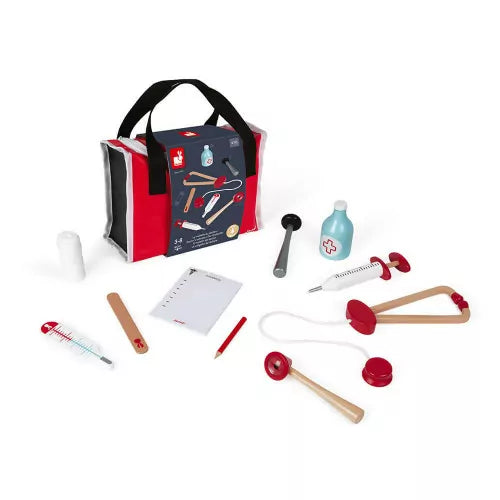
The Janod doctor's case brings together 10 wooden accessories in a real carrying case. It is recommended from age 3.
Price: €29.99. See the doctor's case
For a softer version, the silicone doctor set by Little L (€21.90) offers 9 accessories, including a stethoscope, a thermometer and an otoscope, stored in a fabric bag.
Playing shop
Playing shop means handling first numbers without even realising it: counting coins, weighing fruit, giving change. It is also a game ideally played by two, one as the seller and the other as the customer.

The Little Dutch till has everything a real one does: a scanner, a card reader, and a drawer with coins and notes.
Price: €29.99. Discover the till
To complete it, the shop scales from the same range (€19.99) allow them to weigh fruit and vegetables before going to the till.
DIY
Screwing, hammering, measuring: children watch adults doing DIY with great attention, and are very keen to join in.

The Egmont Toys tool belt contains six wooden tools stored in their pouches, on an adjustable canvas belt. It is recommended from age 3.
Price: €22.95. See the tool belt
Find all these worlds in our pretend play and play like the grown-ups collections.
Realistic or neutral: which pretend play toy to choose?
Children generally prefer toys that look like real objects. It makes sense: they want to do what the grown-ups do, with grown-up things. But a toy that is too sophisticated, one that talks or lights up with every gesture, can also box the play in. The right balance: a recognisable object that leaves the child room to invent what is missing.
A cardboard box can become an oven, a spoon a microphone. These games have just as much value as the ones you buy, and the two complement each other very well.
How to support pretend play
Let the child lead. If you are invited to play, take the role they give you: customer, patient or baby. Avoid correcting or directing the story.
Involve them in real tasks. Setting the table, putting away the shopping, watering the plants: real tasks at their level nourish play just as much as toys do.
Rotate the toys. Putting away some toys for a few weeks and then bringing them back out restores all their appeal.
Offer all games to all children. Play kitchens, dolls, tools and the doctor's case are not reserved for anyone.
At Maison Canailles, we love pretend play toys that leave room for imagination. The ones that look enough like the real thing to be believable, and let the child invent everything else.
Frequently asked questions
At what age does pretend play begin?
The first gestures of imitation appear between 12 and 18 months: pretending to make a phone call, drink or clean. The play becomes richer around age 2, and turns into real role play around age 3.
What is the difference between pretend play and symbolic play?
Pretend play consists of reproducing adult gestures. Symbolic play, which usually appears around age 2, consists of using one object to represent another: a banana becomes a phone, a box becomes a car. In practice, the two mix very quickly.
Which pretend play toy should you give a 2-year-old?
At 2, favour simple and sturdy items: a camera, some play food, a baby doll with its accessories. Our Christmas guide for 2 to 3 year olds brings together other ideas for this age.
My child always plays the same game, is that normal?
Yes, it's very common. By replaying the same scene, the child explores it in depth and masters it. You can suggest other worlds without forcing it: they will get there when they are ready.
To go further
Our entire selection is gathered in the pretend play collection, along with our baby dolls and accessories. For gift ideas by age, our Christmas guides from 1 to 2 years, from 2 to 3 years and from 3 to 4 years are waiting for you. And for an overview, read our guide which toy to give according to age.
Mallaury, founder of Maison Canailles
Mum to a little boy since 2024 and passionate about e-commerce, I personally select every toy in the shop. Most were first adopted at home, by my son. Learn more about Maison Canailles